FULL VIDEO AT THE END OF THIS POST

THIS EXCUSE DID NOT GO WELL IN COURT!
A Dispute Over School Clothes
Imagine a boss offering to help an employee.
Then imagine that help turning into a courtroom battle.
That is exactly what happened in this case.
The Parties and Their Claims
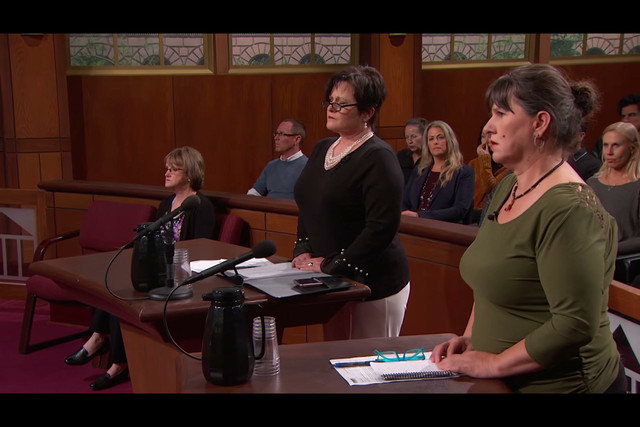
Ms. Spalding, a pizza shop owner, is the plaintiff.
She is suing her former employee, Ms. Richmond, the defendant.
Ms. Spalding claims she spent money on school clothes for Ms. Richmond's daughter, Meredith.
She says this was an arrangement for reimbursement.
Ms. Richmond denies any agreement to pay back the money.
She also has a counterclaim for wrongful termination.

The School Clothes Shopping Trip
Judge Judy begins by asking Ms. Spalding about her claim.
Ms. Spalding confirms she took Ms. Richmond's daughter shopping for school clothes.
She states the lawsuit is about getting that money back.
Ms. Richmond tells Judge Judy she started working for Ms. Spalding in April of 2018.
Her daughter needed school clothes in July, before school started in August.
Ms. Richmond had known Ms. Spalding for a couple of years.
She had worked for Ms. Spalding's husband at a different pizza shop previously.
Her daughter had also met Ms. Spalding.

How the Shopping Trip Came About
Judge Judy asks Ms. Richmond how the subject of clothes came up.
Ms. Richmond explains she was upset at work one day.
Ms. Spalding asked what was wrong.
Ms. Richmond told her about the stress of school starting and not having money for clothes.
She says Ms. Spalding offered to take Meredith shopping.
Ms. Richmond states Ms. Spalding said she would love to spend money on Meredith for school clothes.
Ms. Richmond confirms the shopping trip happened in July.
Her daughter came home with the clothes.
Ms. Richmond saw them all.

When Was Repayment First Mentioned?
Judge Judy asks Ms. Richmond when Ms. Spalding first asked for money for the clothes.
Ms. Richmond states it was the day after she was told she no longer worked there.
That date was August 23rd.
Judge Judy asks if anything was said about money between the July shopping trip and August 23rd.
Ms. Richmond claims that any time it was mentioned, she was told "don't worry about it."
Judge Judy presses her for the exact conversation.
Ms. Richmond says she told Ms. Spalding the clothes cost too much money.
She states she would never have spent that much.
She claims Ms. Spalding responded, "don't worry about it, you're not paying for it."
This conversation happened within a couple of days after July 12th, the shopping date.

The Missing Deductions
Judge Judy asks Ms. Richmond if she was paid between July 12th and August 23rd.
Ms. Richmond confirms she was.
She was paid sometimes weekly, sometimes daily.
Daily pay was approximately $70 to $100.
Judge Judy asks if Ms. Spalding took any money out of her wages during that time.
Ms. Richmond says no.
Ms. Spalding confirms she did not deduct any money from Ms. Richmond's wages.
Judge Judy points out that Ms. Spalding claimed Ms. Richmond owed her money for the school clothes.
Ms. Spalding agrees.

The Lack of Proof for a Demand
Judge Judy asks Ms. Spalding when she first demanded payment.
She asks for a date and any evidence.
Ms. Spalding presents documents she says have dates.
Judge Judy asks for the date of the first demand.
Ms. Spalding indicates it was probably around the 20th after the shopping trip.
Judge Judy asks if she has proof of a demand on the 20th.
Ms. Spalding says no.
Judge Judy rephrases her question.
She asks for proof that Ms. Spalding asked for the money back.
She highlights that Ms. Spalding paid Ms. Richmond for six weeks without deducting anything.
Ms. Spalding admits there is nothing written down as proof of her asking for money.
She then states she asked for money a week after the shopping trip.

The "Big Heart" Explanation
Judge Judy asks Ms. Spalding why she didn't take money out of Ms. Richmond's pay.
Ms. Spalding explains she didn't because Ms. Richmond needed her money for other things.
She says she told Ms. Richmond she could pay her back at $50 a week.
Ms. Spalding states she has a witness for this.
She reiterates that she didn't take money out of the check because Ms. Richmond needed it for rent.
Ms. Spalding says she has a "big heart."
She believed Meredith was a good girl who needed clothes.
She also understood Ms. Richmond had other expenses.
Ms. Spalding states she could afford to help but wanted her money back.
The Wrongful Termination Counterclaim
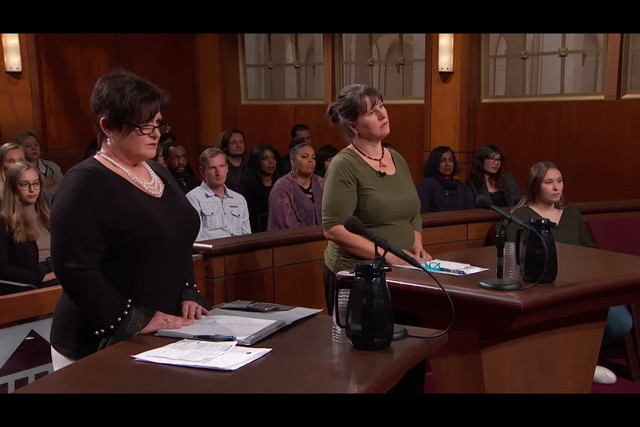
Judge Judy addresses Ms. Richmond's counterclaim for wrongful termination.
She asks if Ms. Spalding fired her due to age, race, disability, religion, or sexual orientation.
Ms. Richmond answers no to all these questions.
Judge Judy explains that an employer can fire an employee for almost any other reason.
She states that if an employer no longer wants an employee to work there, they can terminate them.
This applies as long as it's not based on protected characteristics.
She emphasizes it is the employer's business.

The Verdict
Judge Judy concludes that Ms. Spalding bought Ms. Richmond's daughter presents.
She dismisses Ms. Spalding's case.
The parties are excused.
Watch the Full Judge Judy Case Below
See how this employer-employee relationship unraveled.
Witness Judge Judy's sharp questioning.
Scroll down.
Press play.
FULL VIDEO
CLICK HERE TO WATCH THE FULL VIDEO
https://www.youtube.com/watch?v=kTbfQxeYT7s