FULL VIDEO AT THE END OF THE POST

A Tragic Loss and a Disputed Agreement
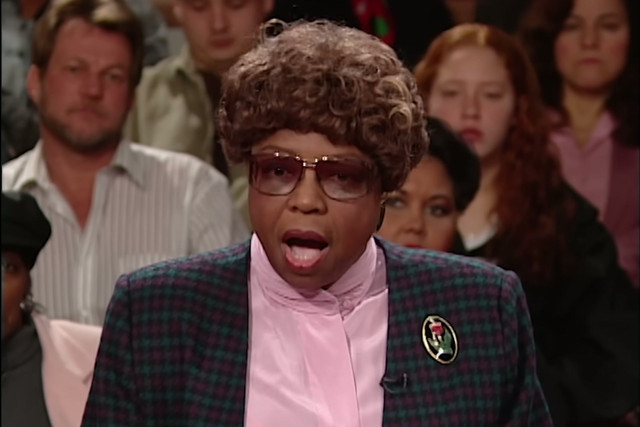
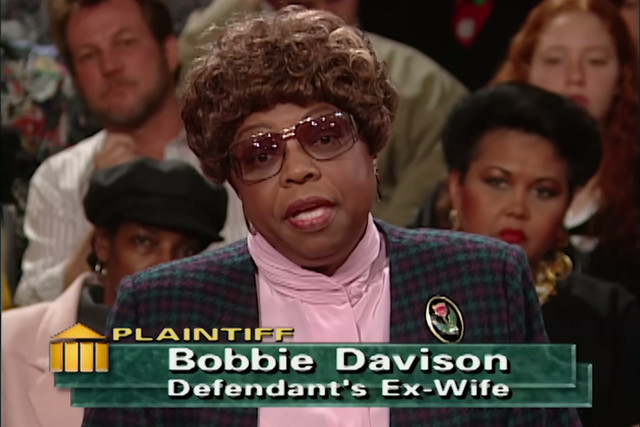
Miss Davidson and Mr. Davidson appeared before Judge Judy.
They were once married.
Their divorce happened approximately 30 years ago.
Sadly, their 36-year-old son died in an automobile accident.
Miss Davidson, the plaintiff, sued her former husband.
She claimed Mr. Davidson reneged on an agreement.
This agreement involved sharing their son's funeral expenses.
Mr. Davidson, the defendant, had a different view.
He presented a defense regarding the legal right to make funeral arrangements.
Initial Funeral Arrangements and a 50-50 Agreement
Miss Davidson recounted the initial events.
She received the news of her son's passing.
They went to the funeral home to make burial arrangements.
At that time, an agreement was made.
Both parents would split the funeral expenses 50-50.
Miss Davidson stated this agreement was made in the funeral director's office.
Mr. Davidson was involved in these initial discussions.

A Legal Complication Arises
Judge Judy reviewed the papers presented.
She noted a crucial detail from the funeral director.
The funeral director informed the parents they had no legal right to make arrangements.
Their son was married.
His wife, Tammy, was the legal next of kin.
Tammy had to approve any arrangements.
This meant the parents, despite being his mother and father, could not legally decide.
Miss Davidson confirmed this information.
There was indeed another meeting with the funeral director.
A Second Meeting and a Heated Exchange
The second meeting at the funeral home involved Tammy.
Miss Davidson was also present.
Mr. Davidson's current wife, Sue Davidson, attended as well.
Mr. Davidson himself was not at this second meeting.
During this meeting, a suggestion caused an argument.
Sue Davidson suggested changing the casket to a wooden box.
Miss Davidson strongly objected to this idea.
She felt it was not Sue Davidson's place to dictate her son's funeral.
The discussion became heated.

A $1,000 Offer and Its Application
Following the argument, Sue Davidson made an offer.
She offered Tammy $1,000.
Tammy accepted this money.
Tammy then gave the $1,000 directly to the mortician.
This amount was applied towards the funeral expenses.
Miss Davidson confirmed this sequence of events.
Mr. Davidson acknowledged this part of the story as accurate so far.
The Defendant's Claim: Agreement Null and Void
Mr. Davidson explained his position.
He stated that the initial agreement became null and void.
This change occurred once it was discovered their son was legally married.
He argued that Tammy, as the legal wife, had the sole right to make decisions.
Therefore, the agreement he made with Miss Davidson was no longer valid.
He presented a paper to Judge Judy.
This paper was the original form they had signed.
It documented their initial agreement before Tammy's legal status was confirmed.
The total amount on this original agreement was $3,631.

Total Funeral Expenses and Credits
Miss Davidson provided details on the total expenses.
She stated that Mr. Davidson's share would be $2,359.67.
This amount included the $1,000 credit he had already provided.
She confirmed she gave him credit for that payment.
The total funeral expenses were approximately $3,600 to $3,650.
This meant Mr. Davidson still owed a significant amount.
The Cost of Opening and Closing the Grave
Miss Davidson brought up an additional expense.
The original funeral agreement did not include the cost of opening and closing the grave.
She paid this cost herself.
The amount for opening and closing the grave was $1,024.
She felt this was also an expense Mr. Davidson should share.
Mr. Davidson's Stance on Grave Costs
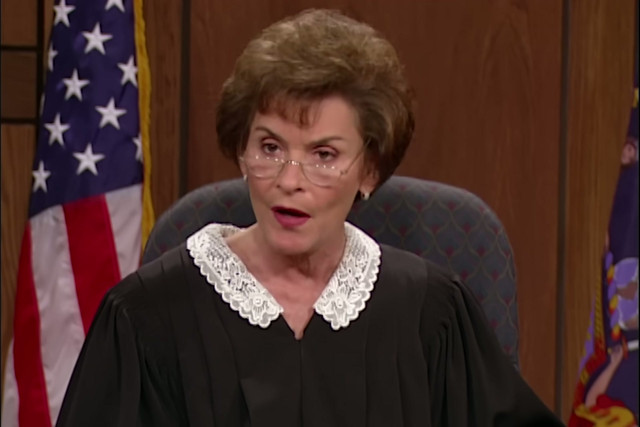
Judge Judy asked Mr. Davidson about this additional cost.
She inquired if he was prepared to contribute to the grave opening and closing.
Mr. Davidson stated he would have agreed to help with this cost.
He said he would have done so if he had known about it at the time.
He implied that the circumstances at the time were different.
Judge Judy's Moral Appeal
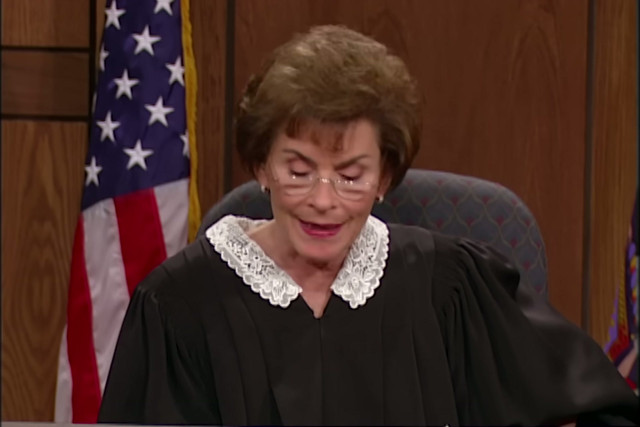
Judge Judy addressed Mr. Davidson directly.
She suggested he would feel better if he agreed to contribute.
She emphasized the moral aspect of the situation.
Judge Judy stated that people coming to court should seek resolution.
She believed that morally, if not legally, he should be responsible.
This responsibility included ensuring his son received an appropriate burial.
Opening and closing the grave was certainly part of that.

Judge Judy's Calculation and Ruling
Judge Judy began to calculate Mr. Davidson's outstanding debt.
She noted that the original agreed-upon amount was $3,631.
Mr. Davidson had only paid $1,000.
This meant he minimally owed $800 for the funeral expenses alone.
Judge Judy then considered the cost of internment.
She decided to apportion half of the original agreed-upon amount to Mr. Davidson.
She also decided to apportion half of the internment costs to him.
She stated that he had consented to do this.
Judge Judy believed this was the right thing to do.
She told Mr. Davidson he would sleep better.
The Final Judgment
Judge Judy issued her final ruling.
She found in favor of Miss Davidson.
Mr. Davidson was ordered to pay Miss Davidson $1,327.
This amount covered his share of the original funeral costs.
It also included half of the internment costs.
Miss Davidson thanked the judge.
The case was concluded.