FULL VIDEO AT THE END OF THE POST

A New Business Venture
Mr. T, the plaintiff, explained the general nature of the business.
Both he and the defendant participated in storage auctions.

They would bid on storage units where owners had not paid their bills.
Sometimes these units contained valuable items, and sometimes they held trash.
Mr. T confirmed this understanding.
He had engaged in this activity as a part-time hobby.
The defendant also participated, and he had a physical venue.
This venue allowed the defendant to sell items he acquired from the storage units.
Mr. T confirmed this as well.
The two individuals decided to form a partnership.
Partnership Details and Investment
The partnership was officially finalized on June 17th, 2019.
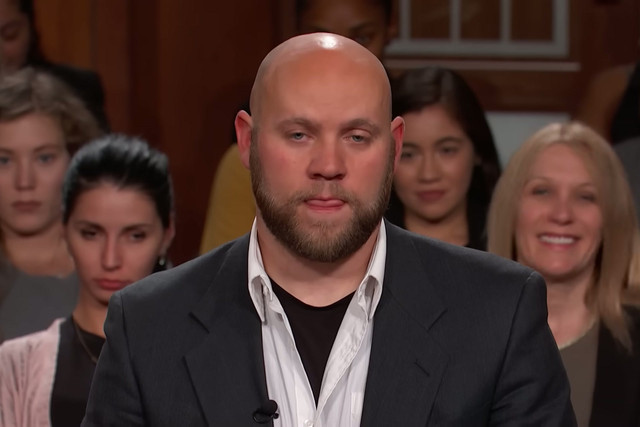
Mr. T was to invest $6,000 into the company.
This investment secured him a 40% share of the company.
The profits were to be split 60/40.
The defendant would receive 60% of the profits, and Mr. T would receive 40%.
Mr. T confirmed these terms.
Judge Judy then asked about the payment of bills, such as rent for the store.
Mr. T stated that when he became a partner, the defendant told him the rent had already been paid.
The Bounced Rent Check
A week after the partnership began, Mr. T received concerning news.
The landlord informed him that no rent had been received.

Furthermore, a check from the defendant had bounced.
Judge Judy directly addressed the defendant about this bounced check.
She asked if the check was for rent.
The defendant claimed it was a deposit check.
He stated it was not meant to be cashed.
Judge Judy pointed out that the word "rent" was written on the check.
The defendant maintained it was a deposit.
Mr. T interjected, stating the defendant had told him there was no money in the account for the check.
Judge Judy pressed the defendant on the bounced check.

She asked if he had no money in his account at that time.
The defendant responded, "Yes, I am."
This indicated he did not have funds.
The $6,000 Investment
Judge Judy noted that Mr. T then gave the defendant $6,000.
She asked the defendant what he did with that money.
The defendant initially said "No."
Judge Judy expressed her dislike for business cases involving unclear communication.
She reiterated that the defendant had no money in his account, evidenced by the bad check.
She highlighted that Mr. T was asking for 40% of the business.

Judge Judy repeated her question about the $6,000.
The defendant explained that the $6,000 was for 40% of the company.
He also stated that his own money went into inventory to fill the store.
He claimed a lot of money was spent on this.
Judge Judy asked again what he did with the $6,000.
The defendant said it was for more inventory for the store.
He also mentioned vendors.
Lack of Proof for Expenditures
Judge Judy asked the defendant to show proof of these purchases.
The defendant stated that all his paperwork was at the store.

He claimed he was locked out of the store.
Judge Judy dismissed this as not her problem.
She explained the process of buying storage units.
She noted that people bid on these units.
Mr. T was asked if he had pictures of the inventory.
He confirmed he had some pictures.
He also mentioned vendor receipts.
However, he stated these receipts were locked in the store.
He could not access them.
Ending the Partnership
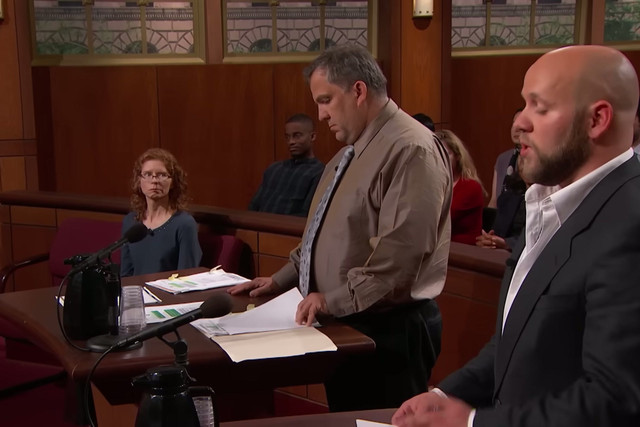
Mr. T ended his association with the defendant on July 14th.
He typed a letter to formalize this.
This was approximately a month after the partnership began on June 17th.
During that month, Mr. T was in the shop.
He testified that some gentlemen came into the shop.
These individuals claimed the defendant owed them money.
Mr. T confirmed this.
He was asked how much money he gave them.
He stated he gave one person $897.

Another person received $145.
A third person was given $710.
Pre-Partnership Wages
Judge Judy asked what this money was for.
Mr. T explained it was for wages.
These were for the time they had worked for "us."
Judge Judy clarified if they worked for both of them.
Mr. T stated the defendant had hired them before he became a partner.
This meant they were working before June 17th.
They had already helped clean out lockers.
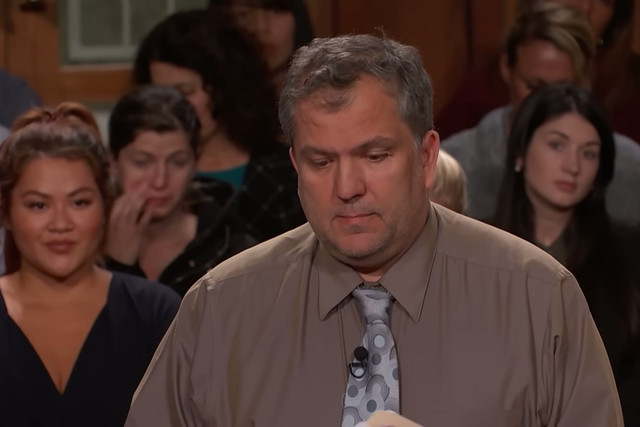
Mr. T confirmed this occurred before the partnership.
Judge Judy then asked Mr. T about his relationship with the defendant.
Mr. T stated the defendant was his husband.
She asked if he took care of the business with the family.
Mr. T replied, "Somewhat? Yes, together."
The Verdict
Judge Judy summarized the situation.
She noted the 60/40 arrangement.
She also mentioned that the bank account was cleaned out.
Mr. T confirmed this.
He stated he had bank statements to prove it.
Judge Judy then delivered her judgment.
She found in favor of the plaintiff.
The judgment was for the amount of $5,000.
She told Mr. T, "Yeah, you got snooker."
She then excused the parties.