FULL VIDEO AT THE END OF THE POST
The Photographer's Business Model
The plaintiff, a photographer, sued the defendants for unpaid photography services.
The dispute centered on high school graduation pictures for the defendants' daughter, Hannah.
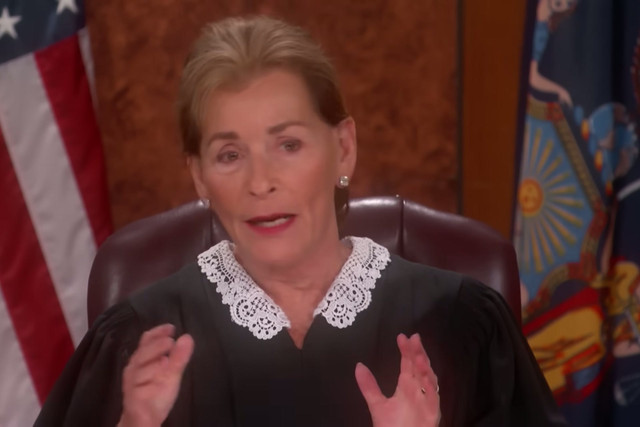
Judge Judy noted the plaintiff's interesting business model.
The plaintiff offered free modeling photo shoots to high school students.
This program played on the desire of teenage girls to be models.
These free shoots often led to students purchasing expensive senior picture packages.
The plaintiff confirmed that most young people in her model program spent thousands of dollars on senior pictures.
Judge Judy described this as a "slick operation" and "very ingenious."
It appealed to parental pride, suggesting their daughter was gorgeous enough to be a model.
Parents would then receive free pictures from the modeling shoot.
The plaintiff then offered senior picture packages.
These packages ranged from $99 to $1,500.
Parents, wanting to commemorate their child's graduation, often opted for the more expensive options.
This could easily lead to expenses of $1,000 or $2,000.

The Senior Picture Session
Hannah and her mother signed on for senior pictures with the plaintiff.
The plaintiff conducted an hour-and-a-half senior photo session with Hannah.
After the session, the plaintiff edited 100 photos.
She also created a slideshow of these edited images.
The defendants paid a $250 down payment to the plaintiff.
The plaintiff then sent digital photos to the defendants via email.
Dissatisfaction with Photos
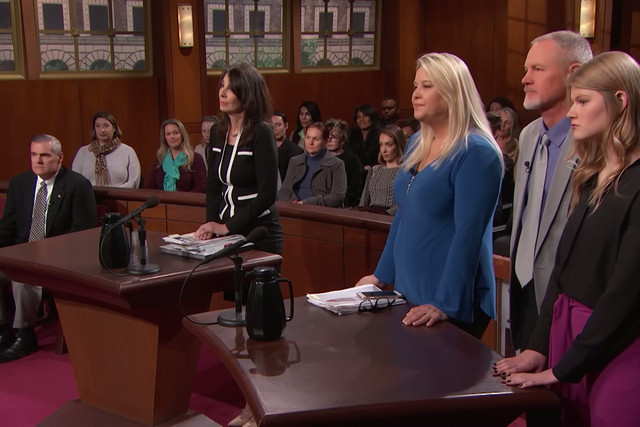
The defendant mother stopped payment on a check for $1,200.
This amount also included sales tax.
Her reason for stopping payment was dissatisfaction with the quality and color of the photographs.
She claimed Hannah's hair color was inconsistent across the pictures.
Some photos were also described as blurry or unflattering.
The defendant mother stated that the pictures she received via email were the basis for her dissatisfaction.
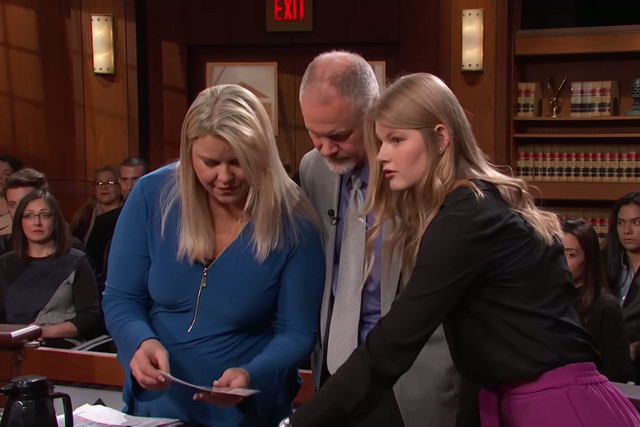
She presented printed photographs to Judge Judy.
These photos showed discrepancies in hair color.
Some also appeared blurry.
Judge Judy Examines the Evidence
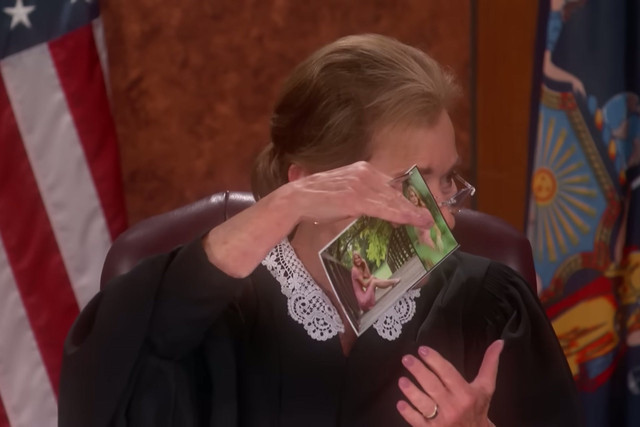
Judge Judy examined the photographs presented by both parties.
She noted inconsistencies in Hannah's hair color.
She also observed blurriness in some of the images.
The defendant mother showed Judge Judy the photos on her phone.
She claimed these digital versions looked different from the printed ones.
Judge Judy commented on the photos.
She said, "If somebody sent this to me, I wouldn't pay for it."
She added, "It's not artsy. It just looks like it's wrong."
The plaintiff stated she had over a hundred pictures for Hannah to choose from.
Judge Judy acknowledged that not everyone is thrilled with high school pictures.
She found some of the pictures "absolutely fine" and "absolutely lovely."
However, she also noted the hair color issue.
She mentioned that with five children and 13 grandchildren, she understood that sometimes pictures are not "hundred percent right."
She cited hair color being "a little off" or lipstick not being "exactly right."
The Stopped Payment Amount
The amount of the stopped check was $1,200.
This included an additional eight and a quarter percent sales tax.
The plaintiff confirmed she had already received a $250 deposit from the defendants.
Judge Judy asked the plaintiff what the $1,200 plus sales tax was for.
The plaintiff stated it was for a 12x12 album.
She also mentioned that once the $1,200 mark was reached, Hannah would receive five more digital images.
The plaintiff said she gave them an extra digital, so Hannah received 10 digitals in total.
These digitals would have accompanied the album.

The Missing Album
The plaintiff claimed the defendants ordered a 12x12 album.
Judge Judy asked to see the album.