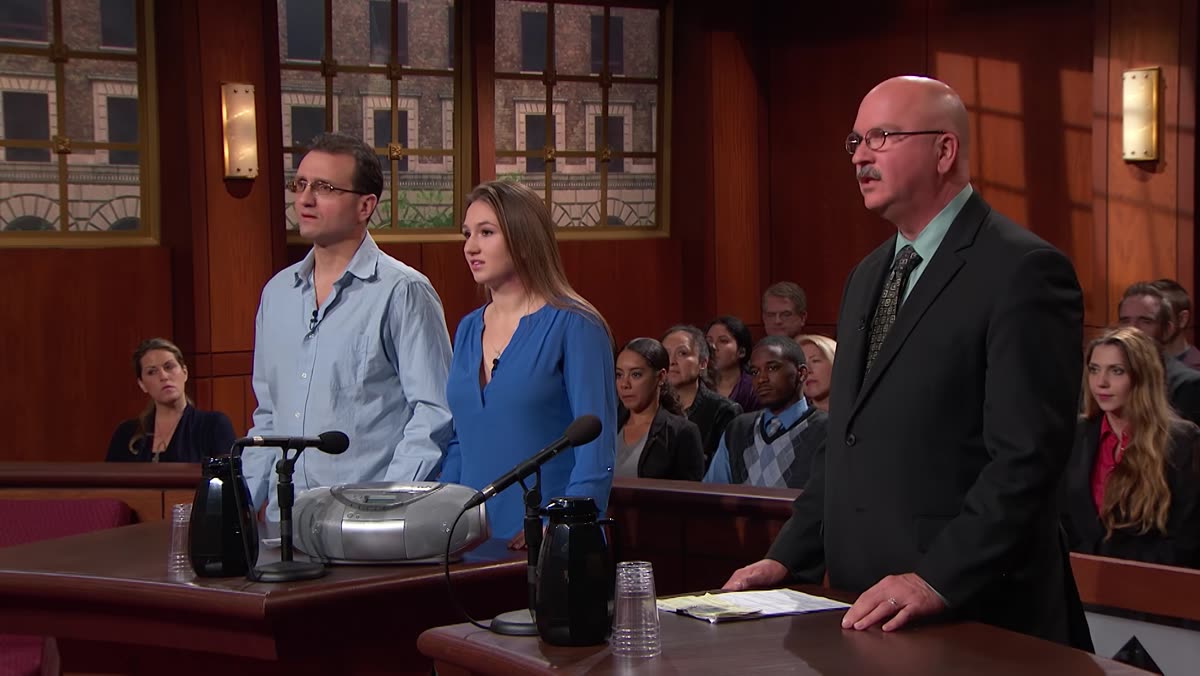
A Car Dispute Reaches the Courtroom
A car meant to help a teenager became the center of a family dispute.
Makenzie Kinneary appeared before Judge Judy alongside her biological father, John Kinneary.
Their case named Makenzie's stepfather, Christopher Reha, as the defendant.
The disagreement involved the vehicle Christopher retained after Makenzie left his household.
John had supplied money intended to help his daughter obtain transportation.
Christopher defended his actions by pointing to rules inside his home.
That explanation placed household discipline beside a separate disagreement about property.
The hearing therefore concerned more than one family's conflicting expectations about behavior.
It also raised the practical question of who should control the car.
Makenzie wanted access to the vehicle purchased with her father's financial assistance.
Christopher believed her conduct justified his decision to take possession of it.
Judge Judy had to examine those competing positions rather than their emotional intensity.
The outcome depended on the money and the treatment of the car.
The two uploaded segments follow that disagreement through the courtroom discussion.
The underlying television case originally aired well before its later online republication.
Its original episode grouping included another, unrelated dispute not covered here.
This account concerns only Makenzie, John, Christopher, and the contested vehicle.
The People Behind the Disagreement
The case brought together a daughter, her father, and her stepfather.
Their distinct relationships mattered because each approached the car differently.
John's involvement centered on the money he had supplied to Makenzie.
Makenzie's involvement centered on the transportation that money was intended to provide.
Christopher's involvement came from his control of the car after their household conflict.
The lawsuit placed John and Makenzie on the same side of the dispute.
Christopher faced their demand for the vehicle or its financial equivalent.
These relationships explain why an argument about house rules entered a property claim.
Christopher was not simply another person who had borrowed the family's vehicle.
He was an adult exercising authority in the home where Makenzie lived.
John was not presented as the person who personally confiscated the car.
He appeared as the father whose contribution helped finance its purchase.
Makenzie was the young person directly affected by losing the vehicle.
Those roles remained distinct even when the hearing addressed them together.
The disagreement became harder because family authority and money intersected.
Judge Judy's task was to keep those strands from becoming interchangeable.
Money Given for Transportation
A detailed account of the episode reports John provided 5,500 dollars.
That amount was intended to help Makenzie obtain a car.
It was not described as Christopher's personal payment for household expenses.
The contribution gave the case a clear financial starting point.
John's involvement did not begin when the adults argued in court.
He had already put substantial money toward his daughter's transportation needs.
The precise destination of that money became important once the vehicle was retained.
The amount also explains why John joined the effort to recover the car.
The stated purpose was transportation rather than compensation for household discipline.
That difference mattered when Christopher defended taking control of the vehicle.
A car purchased using parental assistance may still involve complicated financing arrangements.
Here, however, the reported contribution was directed toward Makenzie's car purchase.
The case narrative therefore begins with a financial contribution for a defined purpose.
Its later conflict concerns whether that purpose survived the household disagreement.
The remaining facts show how the proposed purchase became a financed transaction.

Choosing the Vehicle
The purchase did not proceed as a simple cash acquisition.
The episode account says Christopher favored a newer, more expensive car.
He wanted the selected vehicle to be financed rather than purchased outright.
That preference differed from the possibility of buying a cheaper vehicle.
The distinction helps explain why a loan entered the dispute at all.
A lower-priced car purchased outright would have involved a different payment arrangement.
The financed choice required an initial payment alongside continuing financial obligations.
The published account attributes the preference for financing to Christopher.
It does not establish every conversation that preceded the shopping decision.
It does show that the purchase structure was disputed afterward.
Makenzie's access to the vehicle depended on more than a single cash payment.
The arrangement included a down payment and money reserved for other costs.
These details mattered because Christopher later used control over that same vehicle.
The disagreement was not about a car he had bought entirely for himself.
A substantial part of the transaction was funded by Makenzie's biological father.
That funding remained relevant regardless of Christopher's preference for the purchase.
Where the 5,500 Dollars Went
The reported down payment was 4,000 dollars.
The other 1,500 dollars was allocated to insurance and registration expenses.
Those figures account for the 5,500-dollar contribution described in the case summary.
They also explain why the ruling focused on a smaller amount.
The reported remedy concerned the 4,000 dollars used toward the vehicle.
It did not describe an award of the entire 5,500 dollars.
Money for registration serves a different function from a car down payment.
Insurance expenses also differ from money paid toward acquiring a vehicle.
Separating those categories keeps the arithmetic tied to the actual claim.
The 4,000-dollar figure was therefore not an arbitrary new demand.
It reflected a specific component of the financial assistance already provided.
The recorded summary does not provide the full lending agreement or payment schedule.
It likewise does not establish the eventual costs of every administrative fee.
Those missing details should not be supplied merely to expand the story.