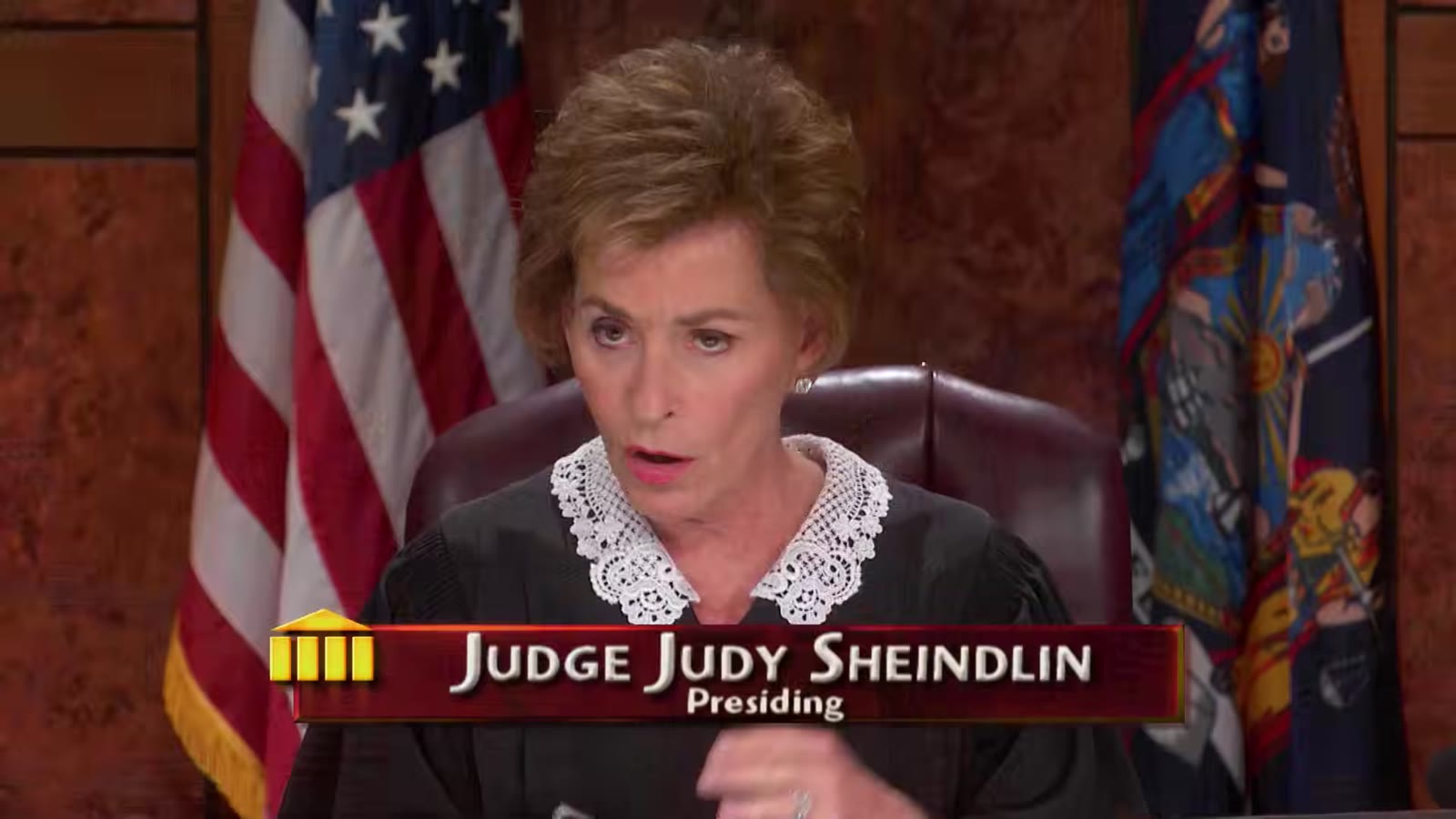
A Car Dispute Reaches the Courtroom
Shauna Moore appears in Judge Judy's courtroom with a dispute involving her former boyfriend, Steven Palmer.
The central object of their disagreement is a sport utility vehicle.
Moore wants the court to address what happened after she financed the purchase.
Palmer is the person who was supposed to make payments toward the vehicle.
The former couple no longer agrees about whether their arrangement has been honored.
Their personal history explains why they entered the arrangement together.
Their financial disagreement explains why the arrangement now matters to the court.
The case is not simply about whether someone has access to a car.
It also concerns whose name appears on the financing paperwork.
That distinction becomes important as the judge examines the parties' responsibilities.
Moore brings a claim against Palmer rather than another driver or seller.
Neither party can settle those separate issues merely by describing the breakup.
The Purchase After Palmer's Release
Moore describes helping Palmer obtain a vehicle after his release from prison.
The car was intended for use during their relationship and family life.
That background explains why Moore agreed to participate in the purchase.
The arrangement joined a personal relationship to a long financial commitment.
A lender's paperwork does not disappear when a relationship eventually ends.
This is why the purchase continues to affect Moore after the breakup.
Palmer's opportunity to use the SUV depended on financial arrangements involving Moore.
Her involvement was not described as a casual ride or temporary favor.
It connected her to an actual vehicle loan and its continuing payments.
The courtroom therefore turns toward the details of that original transaction.
The timing of Palmer's release provides background rather than proof of missed payments.
This distinction keeps the case centered on the SUV instead of personal labels.
Why Moore's Credit Became Important
Moore's account places her stronger credit position at the center of the purchase.
She explains that Palmer initially wanted her assistance as a cosigner.
The financing ultimately went into Moore's name rather than both names.
That distinction matters because the named borrower remains exposed to the lender.
The individual driving the vehicle is not automatically the loan's named borrower.
Likewise, private promises cannot simply erase the obligations shown on financing papers.
Moore's concern therefore extends beyond who parks the SUV each night.
She remains connected to payments attached to an agreement bearing her name.
Palmer's promise to send money was an arrangement between the former partners.
It did not by itself transfer the lender's account into Palmer's name.
Judge Judy has to consider that difference when discussing a remedy.
For Palmer, the arrangement creates a continuing duty to perform his part.
The Down Payment Becomes Another Issue
The vehicle arrangement also involved a one thousand dollar down payment.
Moore says that money was a loan she provided to Palmer.
The parties dispute how much of that initial amount was repaid.
Palmer acknowledges making some payment without giving a clear total in the available account.
This makes the down payment a separate issue from monthly installments.
An initial contribution is not necessarily one of the regular loan payments.
The two amounts therefore should not be merged without supporting payment details.
The court needs to understand which obligation each claimed payment satisfied.
That distinction also matters when considering the amount Moore seeks to recover.
A payment toward the initial loan would reduce that separate obligation.
It would not automatically prove that a later car installment was paid.
Its treatment is tied to the resolution Judge Judy outlines for the vehicle.
A Written Agreement Changes the Discussion
The hearing moves beyond recollection when a written agreement is placed before Judge Judy.
The document explains the parties' intended arrangement regarding the SUV.
Judge Judy reads the paperwork and directs attention to its wording.
The paper matters because it records responsibilities more precisely than general complaints.
The agreement identifies the vehicle and the people participating in the deal.
Its terms establish recurring payments as part of Palmer's obligation.
They also describe a future transfer of title after the financing is completed.
The document contains a condition relating to missed monthly payments.
These provisions make the agreement relevant to both parties' competing positions.
Moore relies on the written terms while arguing about Palmer's performance.
Palmer's responses must be considered alongside what that document actually says.
Those words remain central as the hearing turns toward alleged nonpayment.
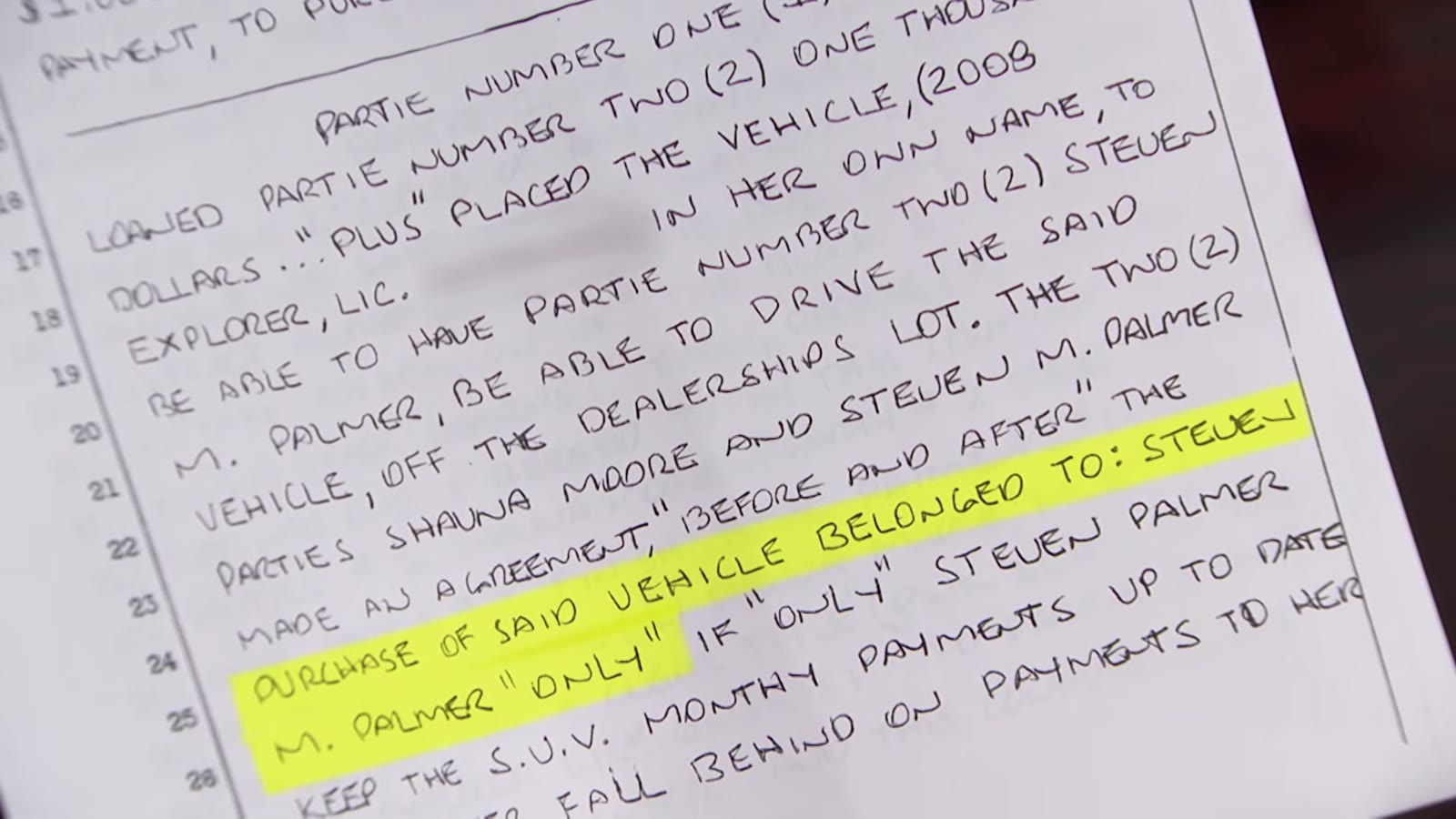
The Agreed Monthly Car Payment
The written arrangement calls for Palmer to pay two hundred forty five dollars monthly.
The monthly figure is central to the dispute about continued performance.
It identifies an expected installment rather than the SUV's complete purchase price.
The paperwork refers to a vehicle loan of approximately fourteen thousand dollars.
Payment over time was therefore part of the parties' original plan.
The agreement does not present Palmer's possession as a payment-free gift.
His ability to keep using the car was tied to fulfilling the arrangement.
A stated amount makes it possible to ask whether a particular installment was paid.
The date of an alleged failure also becomes important when payments recur monthly.
One should not confuse an installment amount with a remaining loan balance.
Neither figure automatically proves how many successful installments preceded the dispute.
Their arguments can be assessed only against those concrete obligations.
Ownership and Title Were Not the Same Issue
The written terms describe the SUV as belonging to Palmer under their private arrangement.