They also contemplate delivery of the title after the loan is paid.
This separates the intended eventual ownership from the present financing structure.
Palmer's claimed right to the car depends partly on that written understanding.
Moore's connection to the lender remains relevant before the loan is completed.
The agreement therefore creates interests that do not fit one simple label.
Someone may drive a vehicle without being the borrower named on its loan.
Someone else may remain responsible for financing without being its daily driver.
These are the exact kinds of distinctions the judge must keep clear.
The promise of a later title transfer gives the arrangement a defined endpoint.
Until then, the parties still need a way to handle ongoing payments.
That direction reflects the difficulty of leaving their financial names entangled.
The Clause About Missing Payments
The agreement includes a consequence if Palmer misses required monthly payments.
Under its wording, a missed payment could require returning the vehicle to Moore.
This provision is important because Moore alleges that one installment was missed.
The existence of the clause does not alone prove that a default happened.
The court still has to consider whether the contested payment was made.
That distinction makes the timing and evidence especially important.
Moore points toward a provision giving her a reason to seek the vehicle's return.
Palmer disputes the premise that he failed to pay as claimed.
The document sets out the rule, while the parties disagree about the facts.
Judge Judy consequently needs more than an argument about the clause itself.
The disagreement turns on whether the condition for using that clause occurred.
The distinction remains central as both parties defend their positions.
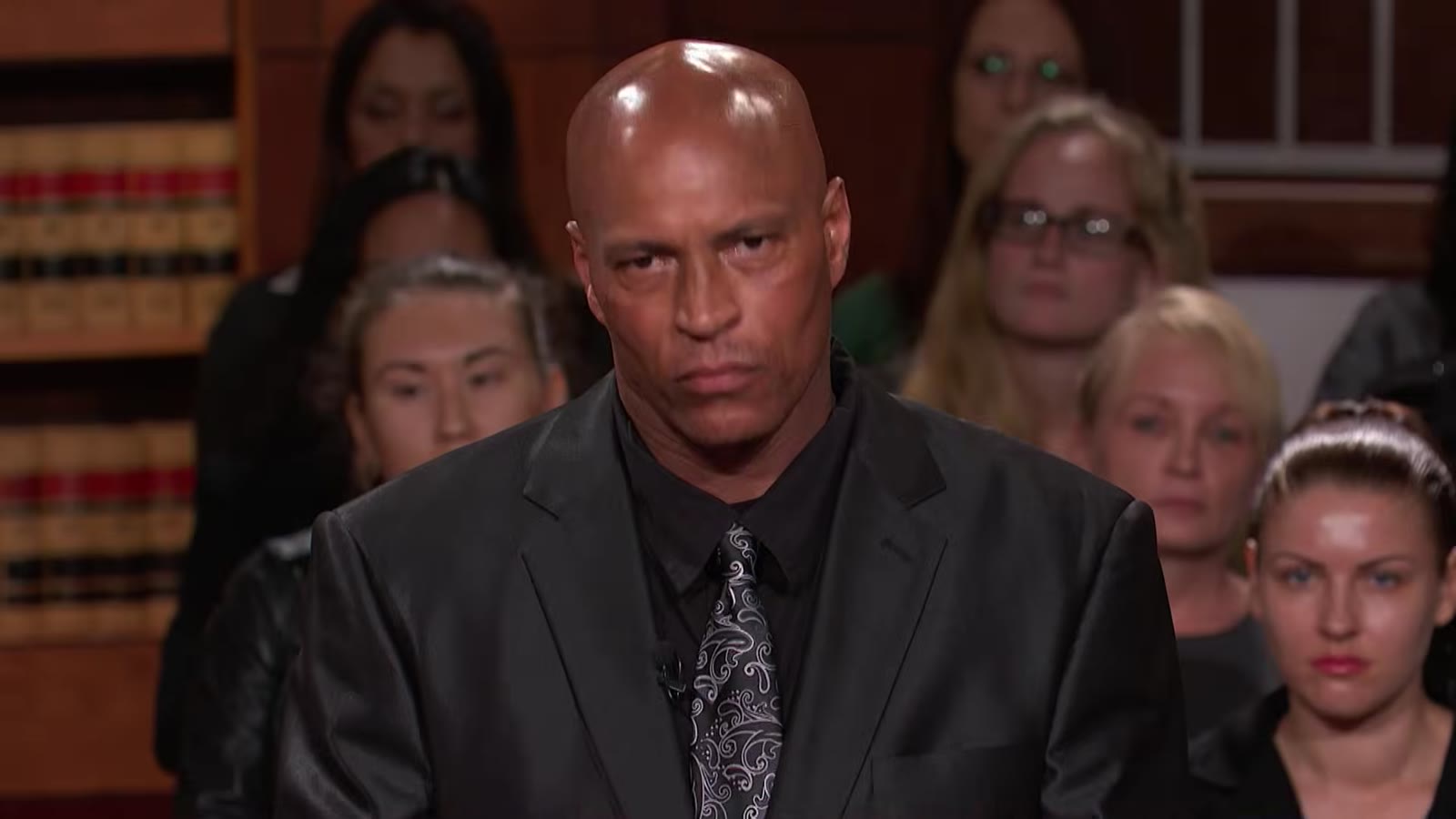
The Claim Includes More Than the SUV
Moore's action is presented as a claim seeking five thousand dollars concerning the car.
Her complaints also involve late payment costs and tickets connected with the vehicle.
These issues arise from the same arrangement but require different explanations.
Recovering the vehicle is not identical to recovering a specific sum of money.
Late fees raise questions about when an installment was due and paid.
Traffic tickets raise a separate question about charges incurred while using the SUV.
Moore's name on the financing papers helps explain her concern about lingering obligations.
Still, a claimed charge must be distinguished from a confirmed unpaid balance.
The court cannot infer the amount of every ticket from the general complaint.
Nor does the existence of a loan establish that every associated fee remains unpaid.
The judge needs to separate agreed obligations from amounts each party merely alleges.
Evidence and the judge's directions determine what happens next.
Moore Questions the December Installment
The second part of the hearing concentrates on a payment Moore says is missing.
She identifies December as the month involved in the dispute.
That makes the allegation narrower than a claim that Palmer never paid anything.
The issue is whether this particular monthly obligation was satisfied.
The difference is important because the agreement contains a missed payment condition.
Moore's allegation, if established, would be relevant to that contractual term.
But the judge must still consider Palmer's account before accepting nonpayment.
Moore continues to argue from her position as the person financing the vehicle.
The courtroom examines the practical consequences of leaving their arrangement unresolved.
A disputed installment can become especially serious when default affects possession.
That is the situation the parties' written agreement brings into focus.
That unresolved factual disagreement shapes the next portion of the exchange.
Palmer Gives a Different Payment Account
Palmer does not accept Moore's account of the December installment.
He maintains that he made payments through cash or money orders.
That response creates a factual disagreement about how money changed hands.
His position is different from a claim that no monthly obligation existed.
Instead, he challenges the accusation that he failed to carry it out.
The distinction matters because both parties recognize the underlying vehicle arrangement.
The argument now concerns performance of that arrangement in a particular month.
Cash transactions may be remembered differently by the people involved.
Money orders may provide a different potential record of payment activity.
The available case summary does not verify a complete transaction history.
It therefore would be inaccurate to declare every contested payment conclusively proven.
It has to be addressed within the broader contract and financing problem.
The Importance of Explaining Payments
Questions about payment methods become relevant once the December allegation is disputed.
A statement that money was paid is not itself a bank statement.
Likewise, an allegation of nonpayment does not reproduce every transaction on the account.
The court must keep those evidentiary differences in view.
The original agreement identifies a monthly obligation with a definite amount.
The disputed question concerns fulfillment rather than the existence of that amount.
Palmer's references to cash and money orders complicate the account of payment.
Those methods are not interchangeable with an assumed electronic transfer.
It would be wrong to supply receipt numbers the hearing does not establish.
It would also be wrong to invent dates for individual transactions.
Judge Judy concentrates on what the parties agreed and what they can support.
That prospective issue eventually becomes an important part of the court's approach.
The Problem of Tickets and Additional Charges
Moore also raises tickets associated with the SUV during the disputed arrangement.
The official description of the second video confirms this additional complaint.