This subject is related to the vehicle but separate from the December installment.
A traffic ticket does not itself count as a payment toward a loan.
Likewise, payment of an installment does not automatically remove a ticket.
These obligations need separate accounting when the parties discuss money owed.
The dispute therefore concerns more than one possible source of financial exposure.
Moore's continued connection to the car explains why she raises associated costs.
The judge must distinguish such claimed costs from the contract's stated payment amount.
The available material does not establish a complete list of individual violations.
It would be misleading to assign particular dates or offenses without confirmation.
The court's eventual direction focuses on ending the continuing financing entanglement.
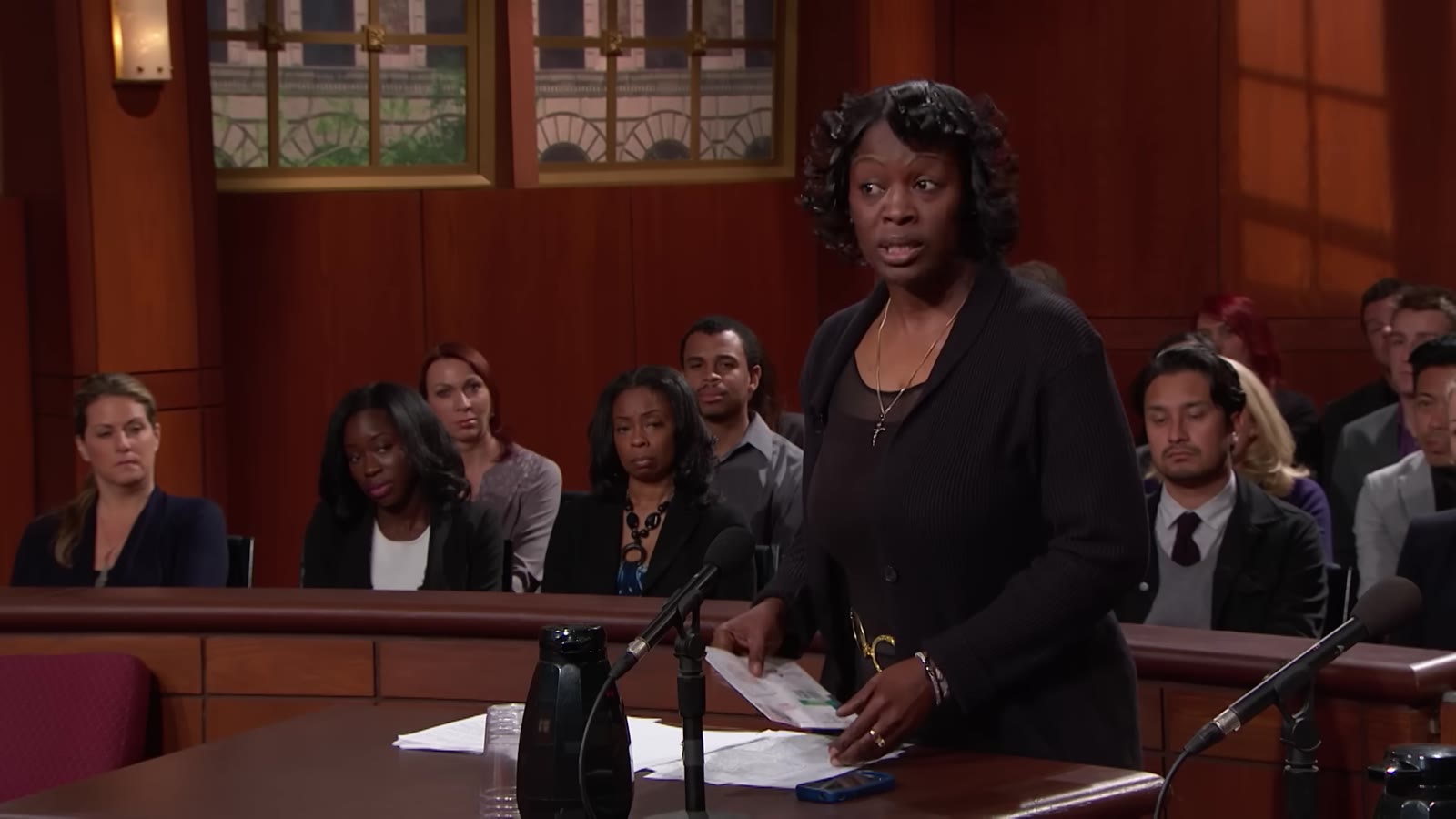
Judge Judy Returns to the Agreement
The written arrangement remains the clearest statement of the parties' intended responsibilities.
Judge Judy reviews its terms instead of treating the breakup as the deciding fact.
The amount due each month is written into that agreement.
The vehicle's future title transfer is also addressed by its terms.
The missed payment condition explains Moore's requested return of the SUV.
Together, these points define what the parties originally promised each other.
The judge must then confront the difficulty of enforcing their arrangement afterward.
Keeping Moore on the financing leaves her connected to the vehicle loan.
Allowing Palmer to continue using the SUV does not remove that connection.
Returning the vehicle would raise different questions from transferring the loan.
The court therefore considers how to untangle the underlying financial obligation.
The emphasis remains on a specific practical step rather than renewed personal trust.
A New Loan Is Proposed as the Solution
Judge Judy directs Palmer toward refinancing the SUV in his own name.
This is the central practical direction described at the hearing's conclusion.
Refinancing would replace the existing financing arrangement with another loan structure.
The purpose is to separate Moore from the continuing vehicle obligation.
That approach differs from simply ordering another monthly payment through Moore.
It addresses the ongoing reason the former partners remain financially connected.
The judge also indicates that Moore will sign off in connection with that process.
Her participation is necessary because the current arrangement bears her name.
The instruction does not mean the hearing supplies a new lender's approval.
A future refinancing step is still distinct from a completed refinancing transaction.
The courtroom identifies what the parties are expected to do next.
The loan itself becomes the focus of the resolution.
The One Thousand Dollar Repayment Condition
The initial down payment returns to the discussion as the judge explains the outcome.
The available case account links Moore's one thousand dollars to her signing off.
It describes payment from the court after Moore completes that part.
That arrangement connects the down payment issue with the planned refinancing.
The one thousand dollar figure should not be confused with the loan's principal.
It is also separate from the amount of the monthly installments.
The distinction prevents a false impression about what the judge actually directs.
A return of that money does not erase the underlying need for refinancing.
Likewise, a refinancing plan does not change what the original down payment was.
The solution recognizes that more than one financial obligation arose from the purchase.
Judge Judy addresses them through a linked sequence of actions.
It does not justify inventing a future repayment history or later dispute.
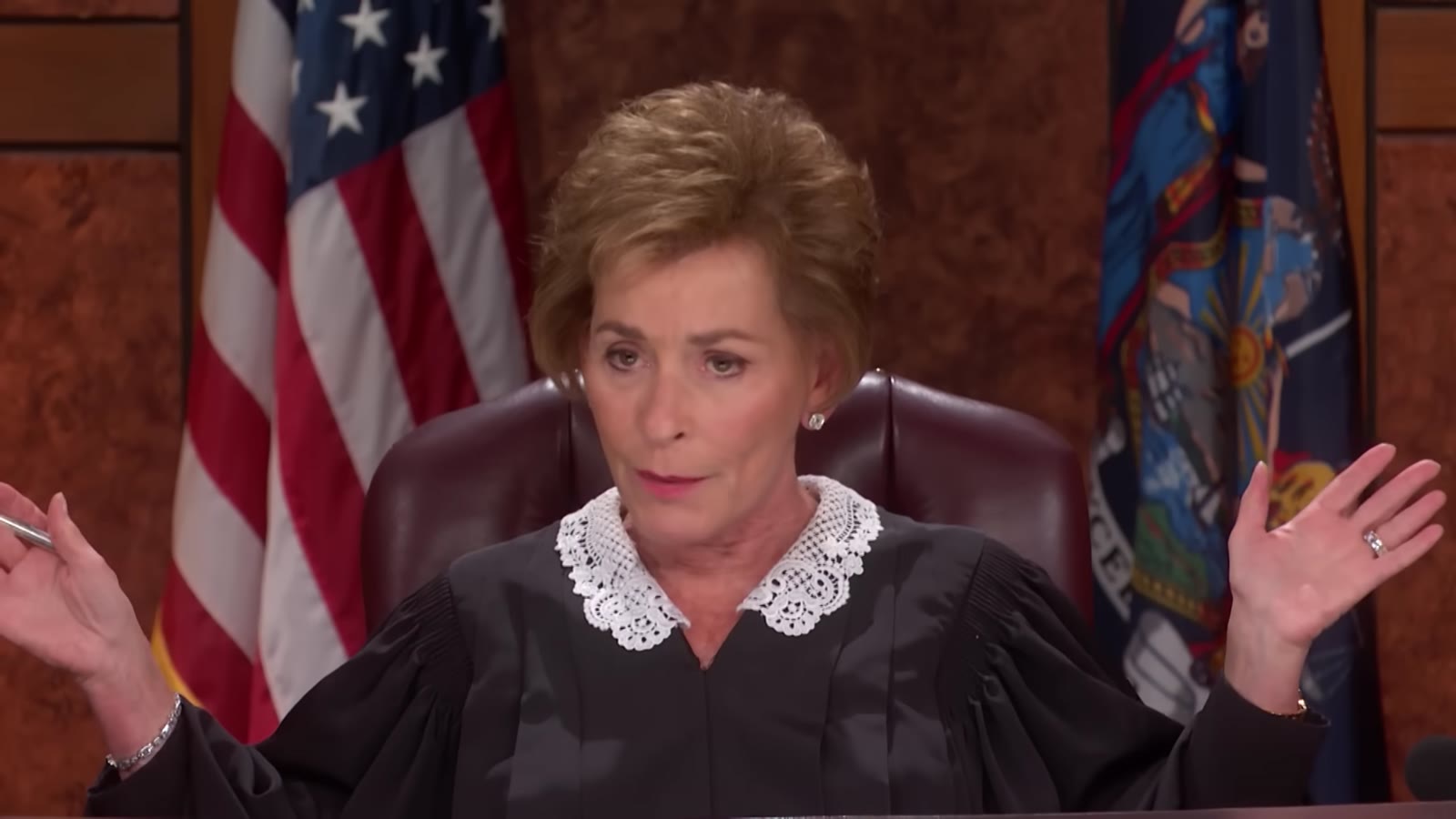
What the Courtroom Outcome Actually Shows
The documented courtroom outcome centers on a proposed refinancing of the SUV.
Judge Judy tells Palmer to arrange financing that removes Moore from the existing loan.
Moore is expected to sign the necessary transfer documents as described in court.
Her one thousand dollar payment is tied to completing that signoff.
Those directions are more specific than saying the former partners simply argued.
They also differ from claiming the judge awarded Moore the full five thousand dollars.
The available case account does not support that larger award.
The judge's approach addresses the ownership and financing problem the agreement created.
It acknowledges the difficulty of leaving former partners attached to one loan.
The outcome should be reported as directions given during the hearing.
It should not be presented as proof that later refinancing was successful.
The refinancing direction explains how Judge Judy sought to end the financial conflict.
The Case's Lasting Financial Lesson
The hearing traces a dispute from personal assistance to a written financial obligation.
Moore helped Palmer obtain an SUV while the parties were still together.
Their agreement anticipated monthly payments and an eventual transfer of title.
It also included an important condition about missed installments.
Once their relationship ended, those obligations did not disappear automatically.
Moore questioned a December payment and raised additional vehicle related charges.
Palmer maintained that he had made payments through cash or money orders.
Judge Judy examined the written deal and addressed the financing arrangement itself.
Her direction toward refinancing sought a practical separation between the former partners.
The linked signoff and one thousand dollar provision addressed the initial contribution.
These details distinguish the case from a simple argument about a borrowed car.
That is the verified limit of the story presented in these two clips.